Dermatologie

Fighting Cancer with Digital Pathology (“DigiPath Cancer Fight”)

Cancer is one of the world’s greatest medical challenges—and one of the leading causes of death. To better understand it and develop new therapies, innovative, interdisciplinary approaches are needed.

This is exactly where digital pathology comes in: At the intersection of medicine and technology, it enables the rapid and precise analysis of large amounts of data using artificial intelligence (AI) and machine learning. Deep learning models, in particular, have the potential to reduce the workload on doctors, minimize errors, and significantly improve the accuracy of cancer screening.

The “DigiPath-Krebskampf” project brings students in grades 8 through 11 from two schools in Graz—the Akademisches Gymnasium and KLEX Klusemann Extern—into direct contact with this cutting-edge technology. In the process, they gain a solid understanding of various types of cancer, including skin, lung, and colorectal cancer.

As part of the EU’s “Cancer” mission, the project raises awareness of cancer among young people, teachers, and the general public. At the same time, the students take an active role: they collect data for the development of algorithms for cancer diagnosis and experience firsthand how AI works based on their own inputs.

The focus goes beyond simply imparting knowledge: the goal is to spark enthusiasm for cancer research, strengthen digital skills, and empower young people to engage critically and actively with digital pathology technologies.

They are supported by experienced mentors from the fields of pathology, biobanking, and computer science. Through workshops, hands-on exercises, and a field trip to the Medical University of Graz, they gain valuable practical experience in working with digital tools and medical datasets.

Furthermore, the project helps raise awareness of cancer screening and patient-centered care—not only among the participants but also within their communities and society as a whole.

“DigiPath-Krebskampf” offers young people exciting insights into the world of modern medicine and imparts skills that extend far beyond the classroom.
Kick-Off Workshop 1

The kick-off events will take place at the Medical University of Graz and mark the start of the project. This is where the participating classes and the project team will get to know each other in person.

At the beginning, the participating students will receive an introduction to the basics of pathology. The focus will be on the following questions:

  • What is pathology, and what do pathologists do?
  • How are the major human organs structured, and what functions do they perform?
  • What is tissue, and how is it examined in pathology?
  • What role does a biobank play, and how is it organized? 

Afterward, the participants will visit the Institute for Pathology Diagnostics and Research as well as the biobank facilities. This will give them a firsthand look at the day-to-day work of pathology and biobanking in cancer diagnostics and research.

Then it’s time for hands-on experience: The students will work at three stations and learn about basic laboratory procedures..

1. Preparation and Storage of Tissue Samples
  • Handling Tissue Samples (simulated using “Frankfurt pieces”)
  • Working with a Scalpel and Forceps
  • Freezing in Liquid Nitrogen and Storage in Cryotubes at a Biobank 
2. Staining of Paraffin Sections
  • Independent performance of a histological hematoxylin-eosin (H&E) stain
3. Microscopy of Human Organs
  • Examination of healthy human organs under a light microscope

Advanced Workshops

Following the kick-off workshops, the project will continue with two additional interactive sessions. Through hands-on exercises, students will learn how digital pathology tools can make cancer diagnostics more precise and efficient.

In the process, they gain insights into the analysis of medical image data, the handling of datasets, and methods of image annotation and feature extraction. The workshops are led by experts in the fields of pathology and computer science.

Workshop 2: Introduction to Tumor Pathology and Digital Pathology

In the second workshop, participants deepen their medical understanding and work intensively with digital tools for the first time.

  • Introduction to the “Case Viewer” software and its application
  • Fundamentals of tumor pathology with a focus on skin, lung, and colorectal cancer
  • Development of tumors and key risk factors
  • Comparison of healthy tissue and tumor tissue using digital microscopy
Workshop 3: Hands-on Training in Digital Pathology and Data Collection

The third workshop focuses on independent work with digital tools. Students apply their knowledge in a practical setting and gain their first experience in data analysis.

  • Introduction to the digital pathology software “QuPath”
  • Annotation of histological specimens (e.g., colorectal or skin cancer)
  • Development of initial simple algorithms for analyzing medical image data

Principal investigator

Research Prof. Priv.-Doz. Dr. med. univ. et scient. med.
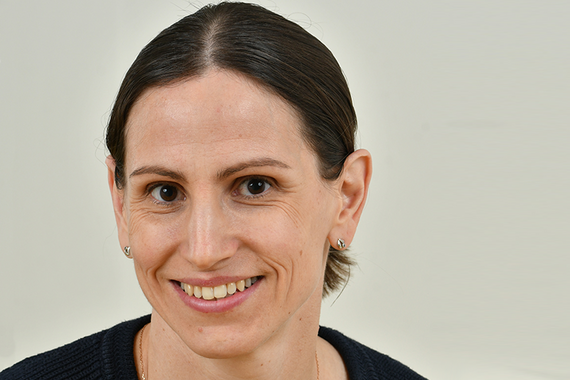
Iva Brcic 
Department of Dermatology and Venereology
T: +43 316 385 30062
Iva Brcic

Projektpartner*innen

Med Uni Graz

  • Universitätsklinik für Dermatologie und Venerologie
  • Diagnostik & Forschungsinstitut für Pathologie: Theresa Marie Godschachner (Pathologie) und Markus Plass (digitale Pathologie)
  • BBMRI.at: Cornelia Stumptner

KLEX-Klusemann Extern

  • Erika Pirker-Keller
  • Menzinger Manuel

Akademisches Gymnasium Graz

  • Georg Knittelfelder
  • Victoria Marth
  • Michael Karner

Further Outreach

Our commitment doesn’t end in the classroom: We actively seek to engage with the public and make research accessible and understandable.

Whether at European Researchers’ Night, the youth health conference “Xund&DU,” or the Long Night of Research—we rely on interactive formats and direct dialogue.

At the same time, we also engage our community digitally: On Instagram and TikTok, we share insights into our work and show how modern cancer research works.

In addition to our regular school workshops, we also offer shorter, creativity-focused sessions for school classes. These provide a hands-on and accessible introduction to the topic.